
Employee Onboarding
Get new hires day one ready by letting them submit documents, meet new colleagues and learn about the company all in one place.
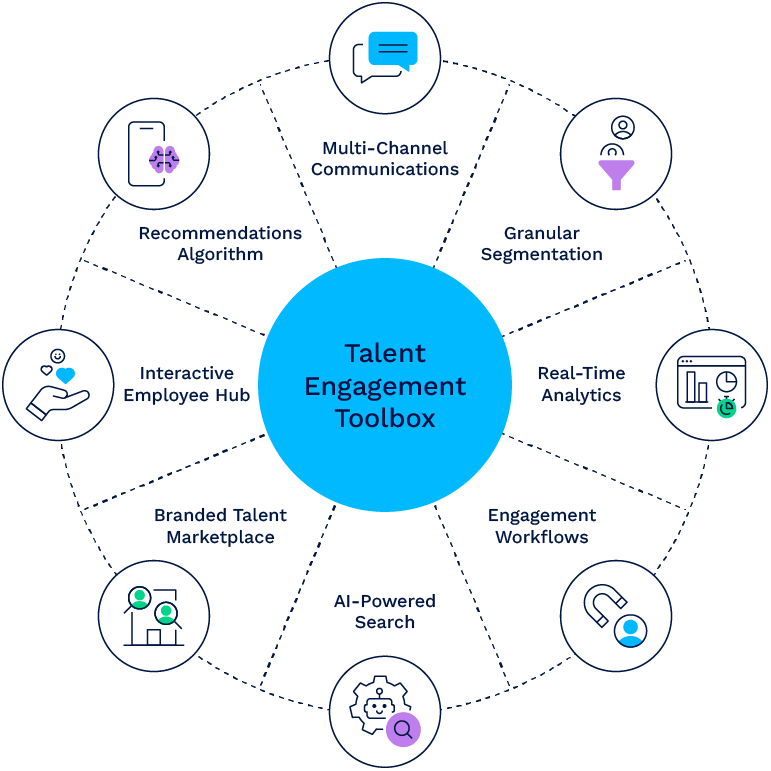
With deep roots in the development of agile technology for sourcing and recruiting, we recognize that strategic HR is all about building and managing relationships. We bring 15 years of recruitment marketing expertise and understand that internal talent success in this era of the “great resignation” demands ongoing and seamless communication across multiple employee engagement touchpoints.
For this reason, we designed our talent management ecosystem (from onboarding to performance management and talent mobility to employee engagement) to help you better segment, engage and provide your workforce with a more meaningful employee experience. Employ Avature to unify messaging, leverage preferences and build lasting relationships.
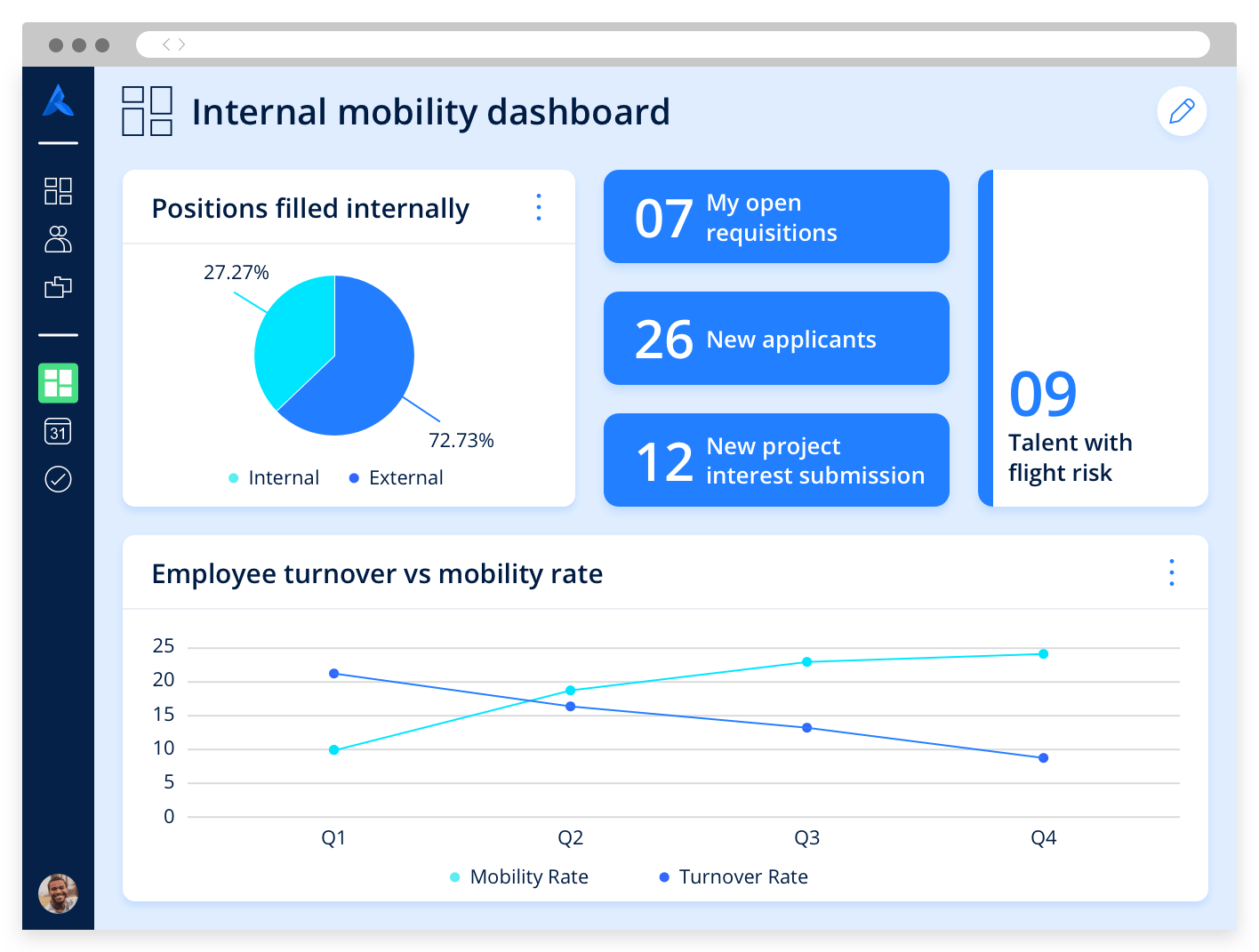
The reality of strategic HR is that no two organizations manage talent in the same way. Most organizations need a truly adaptable and agile solution, regardless of size, culture or industry. While insufficient technology and strategic limitations tend to restrict talent initiatives in the modern enterprise, our talent management suite overcomes these constraints with fully flexible and fully configurable technology tailored to your organization’s needs.
For example, whether you prefer agile performance management or traditional ranking systems, horizontal employee development or vertical career growth, we can create a strategic, evolving HR toolbox that meets your business goals and the demands of a continuously shifting workforce.
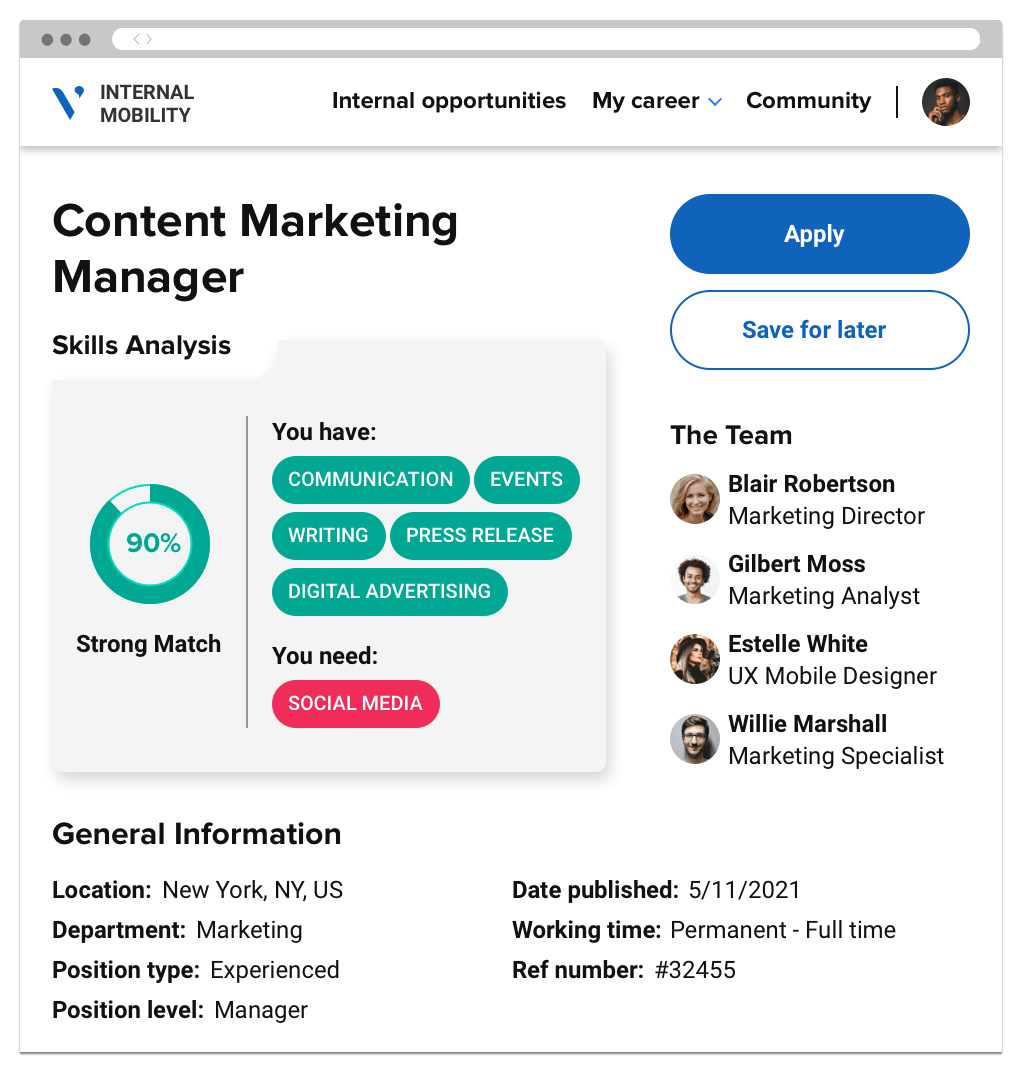
Avature’s AI models drive the talent experience and help companies face the principal challenge of the current environment – retaining talent. With AI roots dating back to 2013, our experts have designed a talent management ecosystem capable of eliminating repetitive and time-consuming tasks, lowering the operating costs of talent management activities and providing employees with a talent experience engineered to help them reach their full potential. This is exemplified in dealing with the “new currency” of talent – skills.
The modern workforce demands rapidly developing knowledge and expertise, significantly increasing the need for agile skills management. Our robust AI and machine learning frameworks empower organizations to take advantage of Avature’s expansive skills ontology to automate the extraction of skills-related data to evaluate employees, provide them with relevant development opportunities and identify workforce skills gaps.
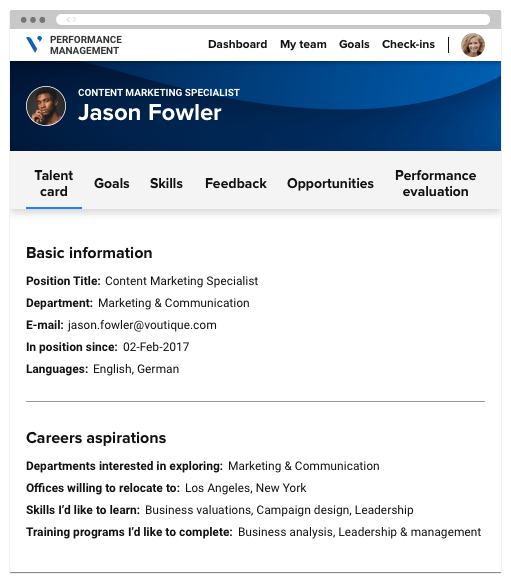
At Avature, we firmly believe modern talent management technology should move beyond traditional HR silos and communication barriers and merge the core pillars of enterprise talent management. With our one-platform approach, we provide organizations with a multi-solution ecosystem focused on talent, driven by data and capable of bridging the gaps between performance management, employee upskilling, career-pathing and workforce engagement.
Empower your HR stakeholders to easily consolidate all employee-related information as they deliver a best-in-class employee experience and manage company-wide talent initiatives from a single location.
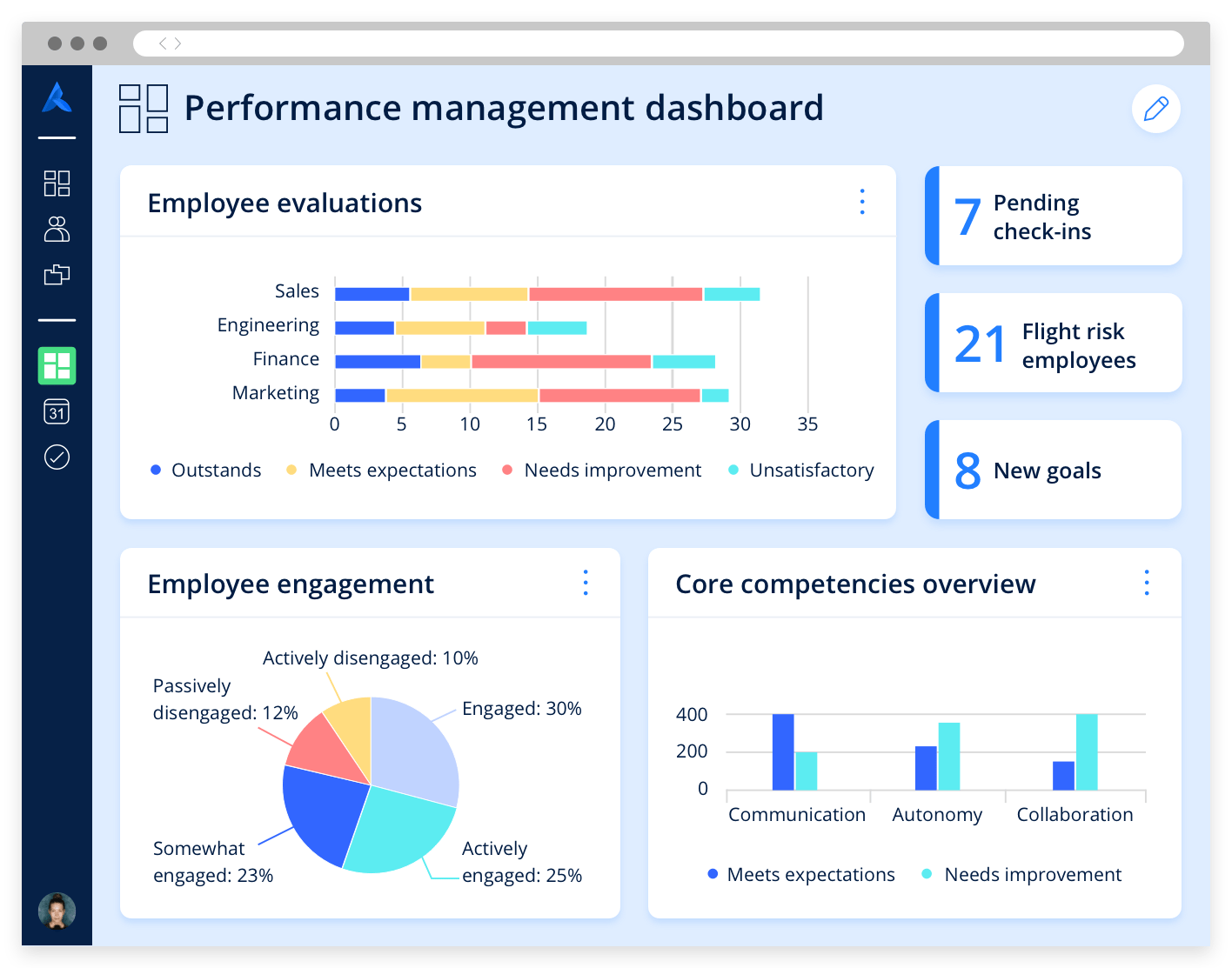
Data is nothing without reporting. Avature allows you to report on any element of your custom data model and processes. As long as the data is in Avature, you can measure, visualize and track it. Our sophisticated reports and dashboards give your talent management stakeholders the power to make real-time, strategic decisions and better develop workforce relationships throughout the employee lifecycle.
You can customize all dashboards to provide each user an at-a-glance overview of relevant information relating to your workforce – from talent gaps to workforce skills distribution to employee wellbeing. Break down these metrics by division, location, position type or other criteria relevant to achieving organizational goals and driving a one-of-a-kind talent experience.
At its core, talent management is an exercise in meaningful stakeholder collaboration. We designed Avature as an agile relationship management platform capable of improving workflow visibility, fostering a culture of consistent and sustainable engagement, and meeting all participants’ needs across the talent lifecycle.
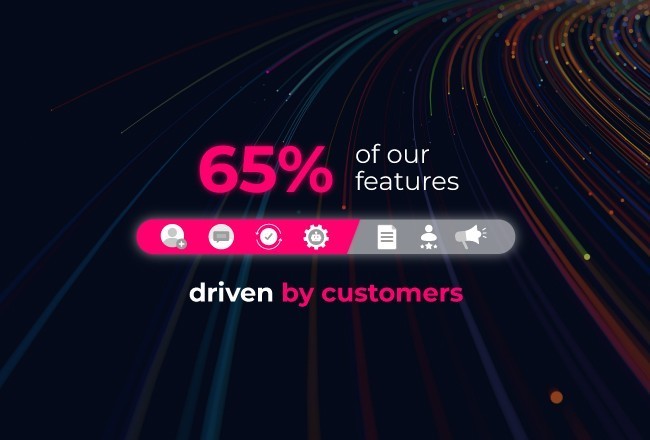
Our customers play a vital role in shaping the Avature platform, as evidenced by 65 percent of our features being driven by them. In this spirit of partnership, our customers will continue to help define our people-centric approach to talent management while we support them in undertaking the most complex HR challenges.
A talent management suite is a unified platform that supports the ongoing development, deployment and retention of employees across the organization. It connects processes such as performance management, internal mobility, succession planning, and career development within a single system. Talent management is not a set of HR processes, it is a continuous system for aligning people with business needs.
In enterprise environments, this capability is critical due to workforce scale, geographic distribution, and role complexity. Organizations must manage diverse employee populations while maintaining visibility into skills, readiness, and potential. Fragmented systems create blind spots that limit workforce planning and reduce the effectiveness of internal talent strategies.
Evaluation should focus on architectural unity. A shared data model, configurable workflows, and real-time talent profiles are essential. Platforms like Avature are designed to unify these processes, enabling organizations to manage talent dynamically rather than through periodic, disconnected activities.
Traditional HR systems are primarily designed to store employee records and support administrative processes, often relying on periodic updates and static data structures. They provide a historical view of the workforce rather than a dynamic understanding of talent. Systems built for record-keeping cannot support real-time talent decisions.
At enterprise scale, this limitation becomes significant. Organizations need continuous insight into employee skills, performance, and career progression to respond to changing business needs. Static systems force reliance on outdated information, which weakens succession planning, internal mobility, and workforce agility.
The key differentiator is how data is captured and activated. Modern platforms use unified data models and continuous inputs to maintain current talent profiles. Platforms like Avature enable this by connecting employee interactions, feedback, and experiences within a single architecture, supporting more accurate and timely decisions.
Internal mobility refers to the ability to move employees across roles, projects, and career paths based on their skills, interests, and organizational needs. A talent management suite enables this by aligning employee profiles with opportunities inside the organization. Internal mobility is the most underutilized source of talent in large enterprises.
For global organizations, internal mobility reduces dependency on external hiring and improves retention. However, without system support, opportunities and talent remain disconnected across business units and regions. This leads to missed opportunities and inefficient workforce utilization.
Evaluation should focus on how well the platform connects opportunities with talent data. A unified data model and intelligent matching capabilities are critical. Platforms like Avature support internal mobility through integrated talent profiles and configurable processes, enabling organizations to surface and activate internal talent more effectively.
Performance management and employee development are interconnected processes that use feedback, goals, and evaluations to guide individual growth and organizational capability building. A talent management suite links these elements within a single system. Performance data only creates value when it drives development outcomes.
In enterprise settings, disconnected systems often separate performance reviews from development planning, resulting in lost insights and limited follow-through. This fragmentation reduces the impact of performance programs and makes it difficult to build consistent capabilities across the workforce.
The key evaluation criterion is whether performance and development share the same data foundation. Unified platforms allow feedback and evaluations to directly inform development actions. Platforms like Avature connect these processes through a shared architecture, ensuring that performance insights continuously shape employee growth.
Configurable workflows allow organizations to design and adapt talent processes based on their specific strategies, rather than relying on fixed system logic. This flexibility ensures alignment between HR practices and evolving business needs. In talent management, rigidity limits relevance.
Large enterprises must accommodate diverse processes across regions, functions, and employee segments. Systems that enforce standardized workflows often fail to reflect these differences, leading to inconsistent adoption and reduced effectiveness.
The key evaluation factor is the depth of workflow configurability and its integration with the data model. Platforms that allow changes without compromising data integrity provide a strategic advantage. Avature is designed with a configurable workflow engine that enables organizations to evolve talent processes while maintaining system cohesion.
A talent management suite uses connected data to provide insight into workforce capabilities, gaps, and opportunities. It integrates information such as skills, performance, and career progression into a unified view. Data-driven talent decisions depend on consistency, not volume.
In enterprise environments, fragmented data sources create conflicting insights and limit the ability to plan effectively. Without a unified view, organizations struggle to identify skill gaps, track development, or align talent with strategic priorities.
Evaluation should focus on the integrity and accessibility of the data model. Platforms with unified architectures enable real-time insights and more reliable analytics. Platforms like Avature provide a connected data foundation that supports continuous workforce analysis and more informed decision-making.
Unifying talent acquisition and talent management means connecting candidate and employee data within a single system that spans the entire talent lifecycle. This allows organizations to maintain continuity from initial engagement through long-term development. The value of talent data compounds when it is preserved and reused.
For enterprises, this integration is essential to support internal mobility, workforce planning, and long-term talent strategies. Disconnected systems create breaks in data continuity, forcing organizations to rebuild profiles and lose valuable insights over time.
The key architectural criterion is whether both domains operate on a shared data model and workflow framework. Platforms like Avature are designed to unify these capabilities, enabling seamless transitions from candidate to employee and supporting a more strategic approach to talent management.
AI drives talent management outcomes by making skills-based decisions scalable, surfacing development opportunities that would otherwise go unrecognized and reducing the manual effort that prevents HR teams from operating strategically. In talent management, the volume and complexity of employee data quickly exceeds what any team can analyze without intelligent automation. Decisions made without AI are decisions made on incomplete information.
In large enterprises, the challenge is not a shortage of talent data but the inability to activate it consistently across thousands of employees, roles and development pathways simultaneously. Skills assessments age quickly, career aspirations change, and workforce gaps shift as business strategy evolves. Without AI processing this continuously, talent programs rely on periodic snapshots rather than a live understanding of the workforce.
Evaluation should focus on how deeply AI is embedded in the platform architecture rather than how prominently it is marketed. Avature’s machine learning frameworks have been in development since 2013 and are designed to work across the full talent lifecycle, automating skills extraction, identifying workforce gaps and connecting employees to relevant development opportunities within a single configurable system.
HCM platforms are built around workforce administration, and their talent management modules extend that foundation rather than support the full complexity of strategic talent development. The result is functionality that covers the basics but lacks the configurability and relationship-building depth that enterprise talent programs require. Talent management is a distinct discipline, and it demands purpose-built technology.
For organizations managing diverse employee populations across multiple regions and career frameworks, HCM talent module limitations become operational constraints. Performance processes cannot be configured to reflect different management philosophies across the business, internal mobility lacks intelligent matching at scale, and learning sits disconnected from development planning and succession with no native data continuity between them.
Avature approaches talent management as a relationship-building ecosystem rather than a record-keeping extension. Every solution in the suite shares a unified data model and configurable workflow engine, meaning talent data flows continuously across processes rather than sitting in isolated modules. Sixty-five percent of Avature’s features are driven directly by customers, reflecting a platform that evolves alongside real-world enterprise complexity rather than one constrained by a broader HR system’s roadmap.
A leading pharmaceutical outsourcer, Siegfried Holding AG recently revamped its excel-driven approach to performance management with the help of Avature.
Learn how Pontoon brought their performance management vision to life by partnering with Avature
Find out more about how USI worked with Avature to implement a new performance strategy, phase by phase.